
The math on AI influencer agencies is straightforward: manage 10 personas earning $10,000 each, take 30%, and you're at $30,000/month. Scale to 20 personas and you're at $60,000/month - $720,000 annually. These aren't fantasy numbers. Agencies are hitting them.
What makes AI influencers different from traditional creator management is the operational model. No talent drama. No scheduling conflicts. No burnout. Content production runs on demand, and the same chatter team can work across multiple personas. The economics favor scale in ways traditional agencies can't match.
This playbook breaks down how to build an AI influencer agency from scratch: business models, team structures, operational systems, and the scaling framework that takes you from first persona to portfolio operation.
The Agency Business Case
Before diving into operations, understand why the agency model works particularly well for AI influencers.
Traditional vs AI Influencer Management
| Factor | Traditional Agency | AI Influencer Agency |
|---|---|---|
| Talent acquisition | Difficult, competitive | Create your own |
| Content production | Dependent on creator schedule | On-demand, unlimited |
| Scaling friction | Each creator = new relationship | Systems replicate |
| Churn risk | Creators leave for competitors | You own the personas |
| Operational hours | Limited by human availability | 24/7 possible |
Traditional agencies spend enormous energy on talent acquisition and retention. Creators get poached. Stars burn out. Contracts get complicated. With AI influencers, you own the assets. The persona is yours. The content library is yours. The fan relationships belong to your operation.
Market Opportunity
Fanvue reports that over 15% of platform revenue now comes from AI creators. That percentage grows monthly. Early agencies establishing AI divisions are capturing market share before competition intensifies.
The total addressable market combines:
- Existing OnlyFans/Fanvue agency market ($500M+)
- New entrants attracted by lower barriers
- Enterprise interest in virtual influencers for marketing
Agency Business Models
Your pricing model determines everything else: what services you offer, who you hire, and how you scale.
Model 1: Revenue Share
The most common model. You take a percentage of creator earnings in exchange for management services.
| Service Level | Typical Take | Services Included |
|---|---|---|
| Basic | 20-25% | Account setup, content posting, basic chat |
| Standard | 25-35% | Full chat management, content strategy, promotion |
| Premium | 35-50% | Everything + content creation, 24/7 coverage |
Example calculation:
- AI influencer earns $8,000/month
- Agency takes 30% = $2,400/month
- 10 influencers at same level = $24,000/month agency revenue
Revenue share aligns incentives - you make more when personas perform better. The downside: income fluctuates with performance.
Model 2: Flat Monthly Fee
Charge a fixed amount regardless of earnings. Works best for established personas with predictable revenue.
| Service Tier | Monthly Fee | Typical Fit |
|---|---|---|
| Chat-only | $500-1,000 | Creator handles content, you handle fans |
| Management | $1,500-2,500 | Full account management |
| Full-service | $3,000-5,000 | Content creation + management |
Advantages: Predictable agency revenue, easier financial planning Disadvantages: Less upside when personas perform exceptionally
Model 3: Hybrid
Combines base fee with performance bonus. Most sophisticated agencies use this.
Example structure:
- $500/month base fee
- Plus 15% of revenue above $5,000/month threshold
If persona earns $12,000:
- Base fee: $500
- Performance: 15% of $7,000 ($12K - $5K threshold) = $1,050
- Total: $1,550/month
Hybrid models provide baseline stability while preserving upside incentive.
Model 4: AI Influencer Ownership
Instead of managing others' personas, you create and own AI influencers directly.
- 100% of net revenue (after platform fees)
- Full control over content, pricing, strategy
- Higher risk, higher reward
- Requires more operational investment
Most successful agencies combine ownership (their own AI personas) with management services (helping others run theirs). Diversification across both models reduces risk.
Team Structure and Costs
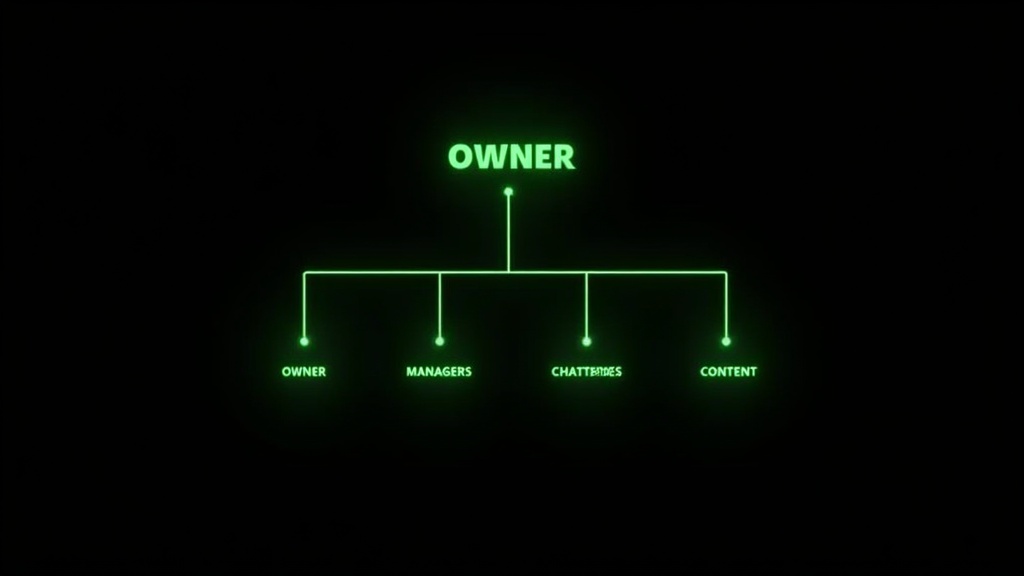
Your team determines your capacity and quality. Here's how successful agencies staff their operations.
Core Roles
1. Chatters The backbone of any fan-based operation. Chatters handle subscriber conversations, drive PPV sales, manage tips, and maintain relationships.
| Experience Level | Hourly Rate | What They Handle |
|---|---|---|
| Entry | $3-5/hour | Basic conversation, simple sales |
| Experienced | $5-8/hour | Complex sales, relationship building |
| Senior | $8-12/hour | VIP fans, training others, quality control |
Coverage math:
- 16 hours/day coverage = 2 shifts
- 2 chatters per shift = 4 chatters total
- At $5/hour average = $80/day = $2,400/month per persona
Scale creates efficiency. One senior chatter can handle 2-3 personas during slower hours. Training and scripts reduce the skill gap between entry and experienced chatters.
2. Content Creators Handle AI image/video generation, maintain character consistency, and build content libraries.
| Role | Monthly Cost | Output |
|---|---|---|
| Part-time generator | $500-1,000 | 200-400 images/month |
| Full-time content lead | $1,500-2,500 | 800+ images/month + videos |
| Content manager | $2,000-3,500 | Oversees multiple personas, quality control |
For AI-specific operations, content creation is more about tool proficiency than creative talent. Someone skilled with Stable Diffusion, FLUX, and video tools can produce volume efficiently.
3. Operations/Management Coordinates everything: scheduling, quality control, financial tracking, client communication.
| Team Size | Management Need |
|---|---|
| 1-3 personas | Founder handles |
| 4-7 personas | Part-time ops person ($1,000-1,500/month) |
| 8-15 personas | Full-time ops manager ($2,500-4,000/month) |
| 15+ personas | Ops team with specialists |
Hiring Sources
For chatters:
- Upwork/Fiverr (inconsistent quality, good for testing)
- OnlineJobs.ph (Philippines - strong English, lower rates)
- Specialized chatter agencies (higher cost, pre-trained)
- Creator communities (people who understand the space)
For content creators:
- AI art communities (Reddit, Discord)
- Fiverr AI art sellers (test before committing)
- In-house training (hire smart, teach tools)
For management:
- Virtual assistant services
- Agency operations specialists
- Promote from within (chatters who show management aptitude)
Team Cost Summary by Scale
| Scale | Monthly Team Cost | Personas Supported |
|---|---|---|
| Starter | $3,000-5,000 | 1-3 |
| Growth | $8,000-12,000 | 4-7 |
| Established | $15,000-25,000 | 8-15 |
| Enterprise | $30,000-50,000+ | 15-30+ |
Rule of thumb: team costs should stay below 40% of gross revenue. Above that, you're scaling too fast or pricing too low.
Operational Systems
Systems separate struggling agencies from profitable ones. Document everything, create playbooks, and build processes that work without your constant attention.
Content Production Workflow
Daily content pipeline:
- Content creator generates batch (10-20 images)
- Quality check against character consistency
- Approved content enters scheduling queue
- Scheduled posts deploy automatically
- Premium content flagged for PPV use
Weekly rhythm:
- Monday: Generate week's feed content
- Tuesday-Wednesday: Create PPV batches
- Thursday: Review performance, adjust strategy
- Friday: Prepare weekend specials
- Weekend: Light generation, focus on engagement
Tools for content:
- Image generation: apatero.com, ComfyUI, Automatic1111
- Video: Kling AI, Runway, D-ID
- Scheduling: Platform-native or Buffer/Later
- Storage: Cloudflare R2, AWS S3, organized by persona
Chat Management System
Chatter operations require structure. Without it, quality degrades and sales suffer.
Shift structure:
| Shift | Hours | Coverage |
|---|---|---|
| Morning | 6am-2pm | Wake-up messages, daytime engagement |
| Evening | 2pm-10pm | Peak activity, most sales |
| Night | 10pm-6am | International fans, late-night engagement |
Handoff protocol:
- Outgoing chatter summarizes active conversations
- Notes VIP fans requiring special attention
- Flags any issues or pending custom requests
- Incoming chatter reviews before starting
Performance tracking:
- Messages sent per hour
- Response time average
- PPV conversion rate
- Tips generated
- Custom content sales
Track by individual chatter. Top performers get more hours. Underperformers get training or replacement.
Quality Control
Consistency separates professional operations from amateur ones.
Character consistency checks:
- Weekly review of generated content against reference images
- Flag and regenerate any off-model content
- Maintain style guide for each persona
Chat quality audits:
- Random conversation reviews (10-15/week per chatter)
- Score on: character voice, sales technique, response quality
- Feedback sessions with chatters on improvement areas
Financial reconciliation:
- Daily earnings tracking per persona
- Weekly comparison against projections
- Monthly P&L by persona
Tools Stack
| Function | Recommended Tools |
|---|---|
| Content generation | apatero.com, ComfyUI, FLUX |
| Video creation | Kling AI, Runway Gen-3 |
| Chat management | Native platform + spreadsheet tracking |
| Team communication | Slack, Discord |
| Scheduling | Notion, Asana, Monday.com |
| Financial tracking | QuickBooks, Wave, spreadsheets |
| Password management | 1Password, LastPass (critical for multi-account) |
Scaling Framework
Growth should be systematic, not chaotic. Here's the framework for scaling from first persona to portfolio operation.
Phase 1: Proof of Concept (Months 1-3)
Goal: Validate the model with one AI influencer
Milestones:
- Month 1: Launch first persona, achieve first 50 subscribers
- Month 2: Reach $2,000+ monthly revenue
- Month 3: Hit $4,000+ with stable operations
Team: Founder + 1-2 part-time chatters Investment: $2,000-5,000 setup + $3,000/month operations Target margin: Break even to 20% profit
Don't scale until Phase 1 is working. Scaling a broken model multiplies problems.
Phase 2: Systematization (Months 4-6)
Goal: Document everything, prepare for growth
Activities:
- Create detailed SOPs for all operations
- Build training materials for new chatters
- Establish content production templates
- Implement tracking dashboards
Milestones:
- Persona 1 hitting $6,000-8,000/month consistently
- All processes documented and repeatable
- First hire trained and operating independently
Team: Founder + 2-3 chatters + part-time content Target margin: 25-35% profit
Phase 3: Controlled Growth (Months 7-12)
Goal: Add personas methodically
Scaling rule: Add one new persona only when:
- Previous persona is profitable and stable
- Team capacity exists (or can be hired quickly)
- Systems are handling current load smoothly
Timeline:
- Month 7: Launch persona #2
- Month 9: Launch persona #3
- Month 11: Launch persona #4
Milestones:
- 4 personas generating $25,000-35,000/month gross
- Agency revenue: $7,500-12,000/month (at 30% take)
- Team of 6-8 people
Target margin: 35-45% profit
Phase 4: Portfolio Operation (Year 2+)
Goal: Run 10+ personas with management layer
Structure:
- Dedicated ops manager
- Specialized teams (content, chat, quality)
- Systems running with minimal founder involvement
Milestones:
- 10+ personas generating $80,000-120,000/month gross
- Agency revenue: $25,000-40,000/month
- Founder time: 10-15 hours/week
Target margin: 40-50% profit
Financial Projections
Let's run the numbers for a realistic growth scenario.
Year 1 Projections
| Month | Personas | Gross Revenue | Agency Take (30%) | Team Costs | Net Profit |
|---|---|---|---|---|---|
| 1 | 1 | $1,500 | $450 | $2,500 | -$2,050 |
| 3 | 1 | $4,500 | $1,350 | $3,000 | -$1,650 |
| 6 | 2 | $12,000 | $3,600 | $5,000 | -$1,400 |
| 9 | 3 | $22,000 | $6,600 | $8,000 | -$1,400 |
| 12 | 4 | $35,000 | $10,500 | $10,000 | $500 |
Year 1 is investment mode. Expect to lose money while building systems and proving the model. Total Year 1 investment: approximately $30,000-50,000.
Year 2 Projections
| Month | Personas | Gross Revenue | Agency Take (30%) | Team Costs | Net Profit |
|---|---|---|---|---|---|
| 15 | 6 | $52,000 | $15,600 | $14,000 | $1,600 |
| 18 | 8 | $72,000 | $21,600 | $18,000 | $3,600 |
| 21 | 10 | $90,000 | $27,000 | $22,000 | $5,000 |
| 24 | 12 | $110,000 | $33,000 | $25,000 | $8,000 |
Year 2 turns profitable. By month 24, you're running a $100K/month gross operation with $8K/month net profit and growing.
Break-Even Analysis
Per persona break-even:
- Chatter costs: $2,000-2,500/month
- Content costs: $300-500/month (amortized)
- Platform fees: 20% of gross
- Your take: 30% of gross
Break-even revenue per persona: approximately $5,000-6,000/month
Below that, you're subsidizing the persona. Above that, margin compounds.
Legal and Business Structure
Protect yourself before scaling.
Entity Formation
Recommended structure:
- LLC for liability protection
- Separate bank account for agency operations
- Written contracts with all chatters and contractors
For US operations:
- Wyoming or Delaware LLC (privacy, low fees)
- EIN from IRS (free)
- Business bank account (Mercury, Wise Business)
For international operations:
- Consider US entity for payment processing
- Consult with international tax specialist
- Proper contractor agreements for each jurisdiction
Contracts Required
1. Chatter Agreement
- Confidentiality (they're maintaining personas)
- Non-compete (can't work for competitors while employed)
- Work-for-hire (content they create belongs to agency)
- Termination terms
2. Client Management Agreement (if managing others' personas)
- Revenue share terms
- Service level commitments
- Content ownership
- Termination and transition procedures
3. Platform Compliance
- Understand ToS for each platform
- Document compliance procedures
- Have process for handling platform issues
Tax Considerations
Agency income is business income. Track:
- All revenue by source (management fees, owned personas)
- Contractor payments (chatters, content creators)
- Software and tool subscriptions
- Any content production costs
Quarterly estimated taxes apply if you're US-based. International operators should understand their local obligations.
Common Mistakes to Avoid
Learn from others' failures.
Mistake 1: Scaling Too Fast
Agencies fail when they add personas faster than systems can support. Each new persona needs:
- Trained chatters familiar with that character
- Content library built before launch
- Time in the schedule for quality control
Fix: One new persona every 6-8 weeks maximum until you have dedicated ops manager.
Mistake 2: Underpricing Services
Charging 20% when you should charge 30% leaves money on the table and starves your operation of resources for quality.
Fix: Price based on value delivered, not competition. Premium service deserves premium pricing.
Mistake 3: Ignoring Chatter Quality
Bad chatters kill conversions. One rude response can lose a fan permanently.
Fix: Rigorous hiring, ongoing training, regular quality audits, quick removal of underperformers.
Mistake 4: No Documentation
"It's all in my head" doesn't scale. When you can't take a vacation without operations suffering, you've built a job, not a business.
Fix: Document everything from day one. If someone else can't follow your process from written instructions, it's not documented.
Mistake 5: Single Platform Dependence
Platforms change policies. Accounts get suspended. Diversification protects revenue.
Fix: Run personas across multiple platforms. Fanvue + OnlyFans + apatero.ai spreads risk.
Getting Started: Your First 30 Days
Ready to launch? Here's your action plan.
Week 1: Foundation
- Form LLC (or start the process)
- Set up business bank account
- Choose your first AI persona concept
- Create initial training images (40-50)
Week 2: Content Building
- Train LoRA model for persona
- Generate 200+ images for content library
- Create 10+ video clips
- Write character personality guide
Week 3: Team and Systems
- Post chatter job listings
- Interview and hire 2 initial chatters
- Create chat scripts and guidelines
- Set up tracking spreadsheets
Week 4: Launch
- Create platform accounts (Fanvue, OnlyFans)
- Complete verification requirements
- Schedule first 2 weeks of content
- Go live and monitor closely
Next Steps
The AI influencer agency opportunity is real and growing. The window for early movers remains open, but competition increases monthly.
Your path forward:
- Start with one persona - Prove the model before scaling
- Build systems from day one - Document everything
- Invest in quality chatters - They make or break revenue
- Scale methodically - One persona at a time until systems are solid
- Track everything - Data drives optimization
Ready to begin? Create your account on apatero.ai for integrated AI influencer creation and management tools designed specifically for agency operations.
Building an AI influencer agency requires sustained effort, but the economics reward those who execute well. The playbook is here. The market is ready. Your move.
Apatero Team
Building the future of AI influencer monetization.