
The debate between human chatters and AI chatbots isn't theoretical - it directly impacts revenue. Data from AI influencer operations consistently shows human-managed conversations convert 3-5x better than AI chatbot interactions. But AI chatbots cost less and scale infinitely. Understanding when each approach works helps you make the right choice for your operation.
This comparison examines real performance data, cost structures, and practical applications for both approaches. The goal isn't to declare a winner but to clarify which method fits different situations, scales, and business models.
The Core Metrics: What Data Shows
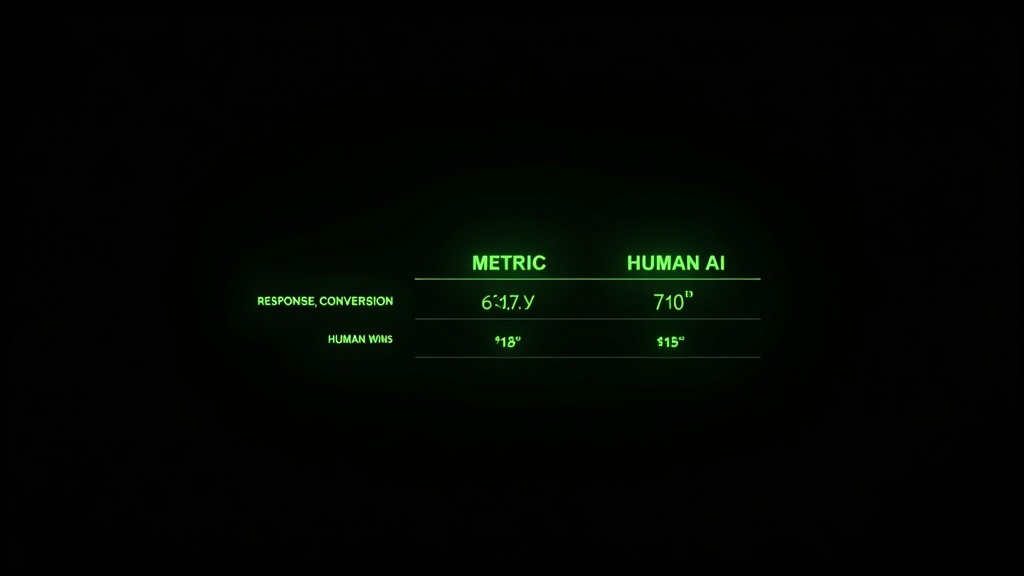
Before diving into details, here's what the numbers actually say:
| Metric | Human Chatters | AI Chatbots |
|---|---|---|
| PPV conversion rate | 28-35% | 8-12% |
| Average PPV price achieved | $35-50 | $20-30 |
| Subscriber retention (monthly) | 72-78% | 55-65% |
| Response time (avg) | 15-45 minutes | Instant |
| Custom content close rate | 40-55% | 10-20% |
| Tip frequency | High | Low |
| Cost per message | $0.15-0.30 | $0.01-0.03 |
| Scalability | Linear (hire more) | Infinite |
The conversion gap is significant. Human chatters nearly triple PPV conversion rates and more than double custom content sales. But AI chatbots cost 10-30x less per interaction.
Why Human Chatters Convert Better
Understanding why humans outperform bots helps identify where each approach works.
Emotional Intelligence and Adaptation
Human chatters read context that AI misses. They notice when a fan is having a bad day, when someone is ready to buy, or when a conversation needs to shift direction. This emotional awareness translates directly to sales.
Example conversation difference:
Fan: "I had such a rough day at work"
AI chatbot response: "I'm sorry to hear that! Would you like to see something special to cheer you up? I have some exclusive content just for you! 💕"
Human chatter response: "Oh no, what happened? Work stress is the worst. I've had those days where everything just piles up... want to vent about it?"
The AI immediately pushes toward sales. The human builds rapport first. That rapport investment pays off - fans who feel heard spend more over time.
Personalization at Scale
Good chatters remember details. They reference past conversations, recall fan preferences, and build continuity that AI struggles to maintain.
What chatters track:
- Fan's real name (if shared)
- Personal details mentioned in conversation
- Content preferences
- Purchase history and patterns
- Conversation style preferences
- Time zone and online patterns
AI can store this data but struggles to use it naturally. Human chatters weave personal details into conversation seamlessly.
Handling Objections and Negotiation
When fans hesitate on purchases, human chatters negotiate and overcome objections effectively.
Common objection: "That PPV is too expensive"
AI approach: Offer discount or repeat value proposition
Human approach: Understand the real objection (maybe it's not price but timing, or they want different content, or they're testing boundaries), address the actual concern, and close appropriately
Human chatters adapt their approach based on the specific fan and situation. AI follows scripts, even sophisticated ones.
Building Long-Term Relationships
The highest-value fans aren't one-time buyers - they're subscribers who stay months and spend consistently. Building those relationships requires genuine connection that AI can't replicate.
Long-term relationship factors:
- Remembering milestones (birthdays, anniversaries)
- Following up on life events mentioned previously
- Adjusting communication style to fan preferences
- Building inside jokes and shared references
- Providing emotional support during difficult times
These relationship elements correlate with lifetime value. Fans with strong connections churn less and spend more.
Where AI Chatbots Make Sense
Despite lower conversion rates, AI chatbots serve valid purposes in certain scenarios.
High-Volume, Low-Touch Interactions
For operations receiving hundreds of messages daily, AI handles the volume that human teams couldn't manage economically.
Good AI chatbot use cases:
- Initial welcome messages
- FAQ responses
- After-hours acknowledgment
- Mass message responses
- Subscription renewal reminders
- Simple appreciation responses
These interactions don't require sales skill. Fans expect quick, functional responses, not deep engagement.
Qualification and Routing
AI can identify high-value fans and route them to humans while handling routine interactions automatically.
AI triage workflow:
- AI handles initial contact
- Conversation scored for engagement level
- High-engagement fans flagged for human attention
- Routine interactions stay with AI
- Sales opportunities escalated immediately
This hybrid approach captures the efficiency of AI while reserving human attention for high-value interactions.
24/7 Coverage Without Shift Costs
Running human chatters around the clock requires multiple shifts. AI provides instant coverage at all hours.
Coverage comparison:
| Coverage | Human (3 shifts) | AI |
|---|---|---|
| Hours covered | 16-20/day | 24/day |
| Response at 3 AM | Maybe | Yes |
| Weekend coverage | Expensive | Same cost |
| Holiday coverage | Very expensive | Same cost |
For creators whose fans are globally distributed, AI ensures no message sits unanswered for hours.
Budget Constraints Early On
New creators with minimal revenue can't afford chatter teams. AI chatbots allow basic engagement until revenue supports human help.
Budget threshold: Below ~$1,000/month revenue, human chatters may not make economic sense. The investment exceeds potential return. AI chatbots maintain some engagement until scale justifies humans.
Conversion Rate Deep Dive
The 3-5x conversion advantage for humans deserves closer examination.
PPV Conversion Analysis
PPV (pay-per-view) messages are the primary revenue driver for most AI influencers. Conversion rates directly impact earnings.
Human chatter PPV performance:
| PPV Price Point | Conversion Rate | Revenue per 100 messages |
|---|---|---|
| $15 | 40% | $600 |
| $25 | 32% | $800 |
| $50 | 25% | $1,250 |
| $75 | 18% | $1,350 |
AI chatbot PPV performance:
| PPV Price Point | Conversion Rate | Revenue per 100 messages |
|---|---|---|
| $15 | 15% | $225 |
| $25 | 10% | $250 |
| $50 | 6% | $300 |
| $75 | 3% | $225 |
At higher price points, the gap widens dramatically. Humans can justify premium pricing through rapport; AI struggles to close higher-ticket items.
Custom Content Conversion
Custom content requests represent highest-margin revenue. Fan pays $50-300+ for personalized content.
Conversion factors:
- Understanding specific request
- Negotiating scope and price
- Managing expectations
- Upselling additional elements
- Building anticipation during creation
AI chatbots fail at most of these. Customs require nuanced conversation that AI handles poorly, resulting in 3-4x worse conversion rates.
Retention Impact
Subscriber retention compounds over time. Small retention differences create large revenue gaps.
6-month revenue comparison (100 starting subscribers @ $15/month):
| Month | Human Retention (75%) | AI Retention (60%) |
|---|---|---|
| 1 | $1,500 | $1,500 |
| 2 | $1,125 | $900 |
| 3 | $844 | $540 |
| 4 | $633 | $324 |
| 5 | $475 | $194 |
| 6 | $356 | $116 |
| Total | $4,933 | $3,574 |
Over 6 months, the 15% retention difference results in 38% less total revenue. Human chatters pay for themselves through retention alone.
Cost Analysis: The Full Picture
Raw per-message costs don't tell the complete story. Total cost of ownership differs significantly.
Human Chatter Costs
Direct costs:
- Hourly rate: $3-8/hour (depending on region and experience)
- Training time: 5-10 hours (paid)
- Management overhead: 10-20% of chatter costs
- Tools/software: $20-50/month per chatter
Fully loaded cost per message:
- Slow periods: $0.30-0.50/message
- Busy periods: $0.10-0.20/message
- Average: $0.15-0.30/message
Team structure for 500 daily messages:
- 2-3 chatters
- 8-12 hours coverage
- Monthly cost: $2,000-4,000
AI Chatbot Costs
Direct costs:
- Platform subscription: $20-100/month
- API costs (if applicable): $0.01-0.03/message
- Setup and configuration: One-time
Fully loaded cost per message:
- Any volume: $0.01-0.05/message
For 500 daily messages:
- Monthly cost: $150-750
ROI Comparison
The question isn't which costs less - it's which generates more profit.
Scenario: 500 messages/day, 200 subscribers, $15/month subscription
Human chatter operation:
- Chat costs: $3,000/month
- PPV revenue (30% conversion, $30 avg): $4,500/month
- Subscription revenue: $3,000/month
- Retention: 75% (loses 50 subs, replaces with promotion)
- Net monthly: $4,500/month profit
AI chatbot operation:
- Chat costs: $500/month
- PPV revenue (10% conversion, $25 avg): $1,250/month
- Subscription revenue: $3,000/month
- Retention: 60% (loses 80 subs, replaces with promotion)
- Net monthly: $3,750/month profit
Human chatters cost 6x more but generate 20% higher profit. At scale, the gap widens further.
Hybrid Approaches: Best of Both
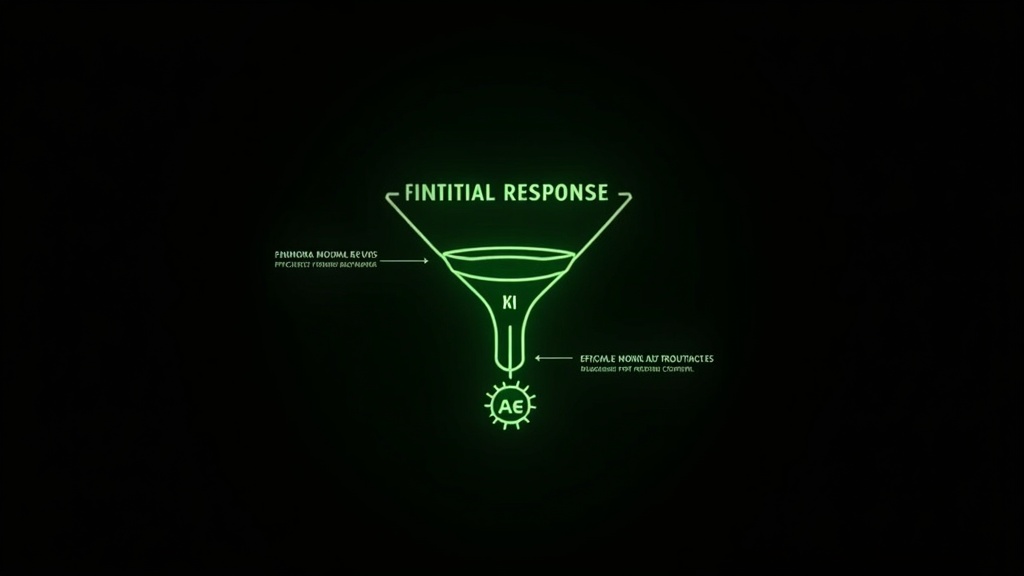
Most successful operations don't choose exclusively - they combine human and AI strategically.
Model 1: AI Front, Human Close
AI handles initial contact and qualification. Humans take over for sales conversations.
Workflow:
- New message to AI responds with welcome
- Conversation continues to AI handles routine questions
- Purchase intent detected to Human notified, takes over
- Sale completed to AI can handle follow-up
Best for: High message volume, limited chatter budget
Model 2: Human Primary, AI Support
Humans handle most conversations. AI assists with templates, suggestions, and off-hours.
Workflow:
- All messages go to human chatters
- AI provides response suggestions
- AI handles overnight acknowledgments
- AI automates routine tasks (welcome messages, reminders)
Best for: Quality-focused operations, sufficient budget
Model 3: Time-Based Switching
Humans cover peak hours. AI covers off-peak.
Workflow:
- Peak hours (when most fans active) to Human chatters
- Off-peak hours to AI chatbot
- AI escalates urgent messages to on-call human
Best for: Global audience, budget constraints on 24/7 human coverage
Model 4: Fan Value Segmentation
High-value fans get humans. Lower-value fans get AI.
Workflow:
- Fan value calculated (spending history, engagement)
- Top 20% fans to Always human chatters
- Middle 50% to Hybrid (human for sales, AI for routine)
- Bottom 30% to AI primary, human for escalation
Best for: Large subscriber bases, data-driven operations
Response Time Considerations
AI's speed advantage matters - but not as much as you might think.
Response Time Impact on Conversion
| Response Time | Conversion Impact |
|---|---|
| Under 5 min | Maximum conversion |
| 5-15 min | -5% conversion |
| 15-60 min | -15% conversion |
| 1-4 hours | -30% conversion |
| 4+ hours | -50%+ conversion |
Fast responses matter. But the difference between instant (AI) and 15 minutes (good human coverage) is only 5% conversion.
The key insight: A human response in 15 minutes converts better than AI response instantly. Speed matters, but quality matters more.
Practical Response Time Targets
With human chatters:
- Peak hours: Under 15 minutes
- Off-peak: Under 30 minutes
- Overnight: Under 2 hours (or AI acknowledgment)
These targets capture most of the response-time benefit while remaining achievable with reasonable chatter coverage.
When to Transition from AI to Human
For growing operations, the question is when to make the switch.
Revenue Triggers
| Monthly Revenue | Recommendation |
|---|---|
| Under $500 | AI only (can't afford chatters) |
| $500-1,500 | Part-time chatter or hybrid |
| $1,500-5,000 | Full-time chatter coverage |
| $5,000+ | Multi-chatter team |
Message Volume Triggers
| Daily Messages | Recommendation |
|---|---|
| Under 50 | AI or creator handles |
| 50-150 | Part-time chatter |
| 150-400 | Full-time chatter |
| 400+ | Multiple chatters |
Quality Indicators
Beyond numbers, watch for these signals that you need human chatters:
- Complaints about response quality
- Declining retention despite good content
- PPV conversion rates below 15%
- Low tip frequency
- Fans asking if they're "talking to a bot"
These indicate the AI approach is hurting rather than helping.
Platform-Specific Considerations
Different platforms handle AI chatbots differently.
Fanvue
Fanvue has built-in AI chat capabilities. Their platform actively supports AI-assisted chatting.
Fanvue approach:
- Native AI chatbot integration
- Designed for AI creators specifically
- AI handles initial responses
- Human takeover supported
Using Fanvue's built-in AI makes sense for basic automation. Adding human chatters for sales remains optimal.
OnlyFans
OnlyFans has no built-in AI chat. Any automation requires external tools with workarounds.
OnlyFans approach:
- External chatbot tools exist but aren't officially supported
- Risk of account issues with aggressive automation
- Most successful creators use human chatters
- AI limited to response suggestions, not autonomous chatting
Conservative approach recommended on OnlyFans - human-primary with AI assistance only.
apatero.ai
apatero.ai emphasizes human chatters over AI automation. Their platform includes chatter management tools rather than AI chat features.
apatero.ai approach:
- Built for human chatter workflows
- Chatter accounts with permission controls
- Optional managed chatting (Apatero's team handles it)
- Focus on conversion over automation
The managed chatting option provides an interesting middle ground - you get human quality without managing chatters yourself.
Building a Chatter Team
If human chatters are the right choice, here's how to build the team.
Hiring Chatters
Where to find:
- Upwork/Fiverr (variable quality)
- Specialized chatter agencies
- Fan platform communities
- Referrals from other creators
What to screen for:
- Written communication skills
- Understanding of the persona/character
- Sales ability (crucial for conversion)
- Reliability and professionalism
- Experience with fan platforms (helpful, not required)
Compensation models:
- Hourly: $3-8/hour
- Commission: 5-15% of sales
- Hybrid: Lower hourly + commission
Commission models align incentives with performance but require good tracking.
Training Chatters
Essential training elements:
- Character/persona guidelines
- Conversation style and voice
- Platform rules and boundaries
- Sales techniques and scripts
- Handling difficult situations
- Content vault familiarization
Training time:
- Basic competency: 5-10 hours
- Full effectiveness: 2-4 weeks of practice
- Ongoing: Regular feedback and adjustment
Managing Chatters
Key management tasks:
- Shift scheduling
- Performance tracking
- Quality reviews
- Regular feedback
- Script updates
- Addressing issues quickly
Good management separates high-performing chatter teams from mediocre ones.
The Verdict: When to Use Each
Choose Human Chatters When:
- Revenue exceeds $1,500/month
- PPV and custom content are primary revenue sources
- Subscriber retention matters (it always does)
- You can manage a team (or pay for managed service)
- Quality of fan experience is priority
Choose AI Chatbots When:
- Revenue below $1,000/month
- Message volume overwhelming for budget
- Covering hours no human can cover
- Simple interactions (welcomes, FAQs)
- Qualifying leads before human engagement
Choose Hybrid When:
- Growing operation between scales
- Want AI efficiency with human quality
- Different fan segments need different approaches
- Testing what works before committing fully
Practical Recommendations
For New Creators (Under $1K/month)
Start with AI chatbots for basic engagement. Focus energy on content creation and promotion. Once revenue grows, transition to human chatters.
For Growing Creators ($1K-5K/month)
Hire first chatter to cover peak hours. Use AI for off-hours acknowledgment. Track conversion rates to justify expanding human coverage.
For Established Creators ($5K+/month)
Build proper chatter team with full coverage. Use AI only for specific automation tasks. Focus on retention and lifetime value.
For Agencies
Scale human chatters with operations. Consider managed chatting services (like apatero.ai offers) to simplify operations. AI chatbots rarely make sense for serious agency operations where quality drives reputation.
Final Analysis
The data clearly favors human chatters for conversion and revenue. AI chatbots cost less but generate less. The choice depends on your scale, budget, and priorities.
For most AI influencer operations aiming for growth, investing in human chatters pays off. The 3-5x conversion advantage compounds over time through better retention, higher ticket sales, and stronger fan relationships.
AI chatbots serve as a bridge for early-stage creators and a supplement for specific use cases. But the future of AI influencer engagement is human - the irony of AI-generated personas being sold through human conversation isn't lost on anyone, but it works.
Building your AI influencer operation? apatero.ai includes chatter management tools or optional managed chatting service. Focus on content while professionals handle engagement.
Apatero Team
Building the future of AI influencer monetization.